Best Apollo Alternatives for B2B Sales Teams in 2026
Decide if you should switch from Apollo, then find the right category of tool for your needs. Framework for EU teams, email specialists, and API-first builders.
Published
Mar 10, 2026
Written by
Chris P.
Reviewed by
Nithish A.
Read time
7
minutes
Apollo.io packs a 210-million-global-contact database, an email sequencer, a dialer, and a CRM into one platform. For many teams, it works…until it doesn't.
Complaints about the accuracy of Apollo’s contact data on review sites have risen significantly over the last few years. Credit allowances have shrunk three times in two years. And teams selling outside the US regularly find that coverage gets thin right where their pipeline needs it most.
If any of that sounds familiar, the fix depends on what's actually broken. This guide sorts Apollo.io alternatives into three categories: turnkey platforms, sending infrastructure, and data pipelines, so you can match the tool to the job instead of trusting whichever vendor ranked itself #1 on its own blog.
Why B2B sales teams switch from Apollo.io
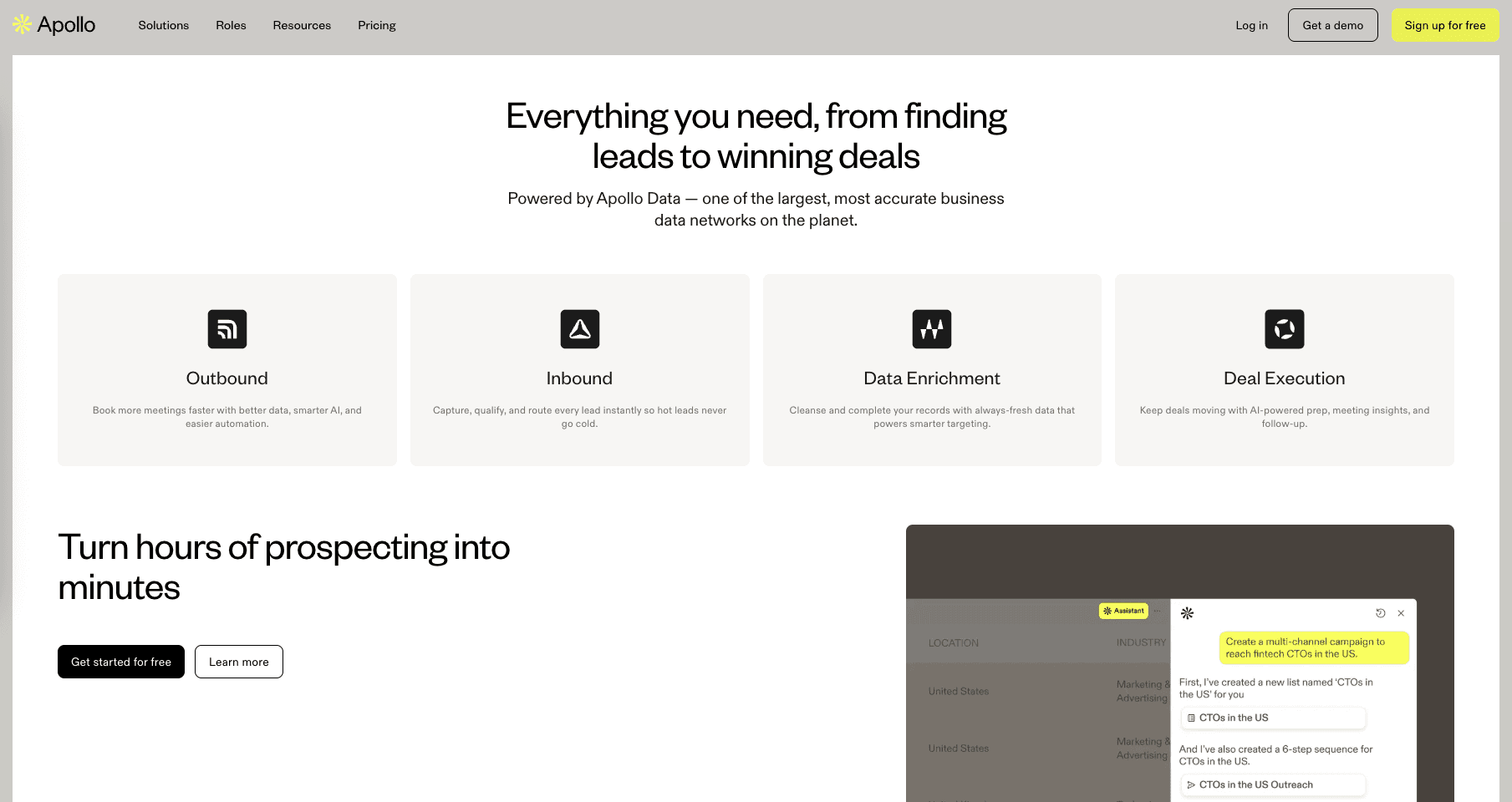
Apollo.io is an all-in-one sales platform that bundles a contact database, email sequencer, dialer, and CRM into a single product. That bundling is the pitch, and also the biggest friction point. When one platform tries to do four jobs, each job gets a fraction of the engineering focus, and the cracks show up in predictable ways.
Even loyal Apollo users tend to hit the same friction points once their outreach scales or shifts outside the US. Here's what shows up most often:
1. Data quality keeps slipping
User reviews consistently flag that Apollo's contact data has degraded over recent years. The platform refreshes records in batch cycles, so information decays between updates, bounced emails climb, phone numbers go stale, and reps waste time on contacts who left their roles weeks ago. At scale, even a small accuracy drop compounds into real pipeline damage.
2. Price per lead keeps increasing
Apollo has increased per-lead costs constantly over the last few years. For individual reps, that's an annoyance. For agencies managing multiple client accounts with high-volume prospecting across several ICPs, it changes the math entirely.
3. Non-US coverage is patchy
Apollo's DNC screening covers only the UK and the US. If your pipeline targets EMEA, particularly Germany, France, or the Nordics, you're prospecting without compliance safeguards in markets where regulators are active. The underlying contact data for European and APAC regions is also thinner and less accurate than US records.
4. Feature bloat raises the learning curve
A team that only needs accurate email addresses still inherits Apollo's full sequencer, dialer, deal tracker, and analytics suite. That means more onboarding time, more settings to configure, and more things that can quietly break a workflow. Teams end up paying for features they never open.
5. API access doesn't support real automation
Apollo offers an API, but it was built as a bolt-on to a UI-first product. Teams powering AI agents, custom enrichment pipelines, or automated prospecting systems can find the coverage incomplete and the data model oriented toward human workflows. If your "user" is code rather than a person, Apollo's architecture can create friction at every step.
These five issues might not all hit at once. Most teams tolerate one or two for months before a trigger event, like a bad quarter of deliverability, a push into new markets, or a mandate to build internal tooling, forces a real evaluation.
The alternative you choose for Apollo.io depends on your geographic focus, primary outreach channel, and scale requirements. The answer isn't a single "better" tool. It's the right tool for the job your workflow actually needs done.
Teams running call-heavy outreach across the EU can get better results from Cognism's phone-verified mobiles and 15-country DNC screening.
High-volume cold emailers who already have contact data find that dedicated sending tools like Instantly.ai deliver stronger inbox placement at lower cost.
Technical teams building AI SDRs or custom prospecting systems can benefit from Crustdata’s API-first data infrastructure, which provides real-time signals.
For enterprise data needs, ZoomInfo is Apollo's most direct large-scale alternative, with database coverage of over 135 million verified contacts and deep firmographic depth.
The rest of the field breaks into specialists, such as cold email platforms, data infrastructure APIs, and budget-friendly point solutions, each competing with a different piece of Apollo's bundle rather than the whole thing.
Turnkey Apollo replacements for sales teams
Turnkey alternatives are GUI-based platforms with built-in outreach, CRM integrations, and self-serve access that replace Apollo's full workflow without requiring engineering resources. A sales rep can log in on day one, build a list, and launch a sequence, with no developer needed.
This is the category most teams evaluate first because it's the most direct swap. You keep roughly the same workflow but switch the vendor underneath it. The tradeoff is that you're still locked into one platform's data and refresh cycle. For many teams, that's perfectly fine. For others, it's the same structural problem wearing a different logo.
Before comparing individual tools, it helps to know what actually separates them. Four criteria matter most when evaluating a turnkey Apollo replacement:
How does the platform verify its data? Some tools rely on community-sourced records that degrade quickly. Others invest in multi-step verification combining AI and manual checks. The verification method directly affects your bounce rate, connect rate, and sender reputation.
What is the platform’s geographic coverage? US-focused teams have plenty of options. The gaps appear in Europe, APAC, and Latin America because coverage isn't just about having records in a region. It's about verified phone numbers, locally checked DNC lists, and data that holds up to GDPR scrutiny.
What happens to pricing at two to three times your current volume? Credit-based systems, seat-based subscriptions, and hybrid models each create different cost curves at scale. A credit model might look affordable for five reps doing 50 lookups a day, then blow past budget when you add a 20-person SDR team. Model the math at scale, not just the sticker price on the plan you'd buy today.
How fast can a new rep start prospecting? Some platforms carry steep setup and configuration overhead that eats into the first quarter. Others offer Chrome extensions and one-click integrations that get reps productive within a day. If your team is small and moves fast, a shorter learning curve saves more money than a 10% discount on the annual contract.
Each tool profiled below is measured against these four criteria, so you can compare on substance rather than on marketing copy. Here's how the main contenders stack up.
TL;DR: How the turnkey Apollo.io alternatives compare
Data accuracy | Geographic coverage | Pricing | Ease of adoption | |
ZoomInfo | Strong verification for US enterprise and mid-market tech. Less reliable outside English-speaking markets. | US-heavy. International records exist but lack the depth of region-specific providers. | Not publicly listed. Requires sales conversation. Annual contracts with credit-based limits. | Feature-rich with a steeper onboarding curve. Expect dedicated setup and training time. |
Cognism | 16-step Diamond Data verification on mobiles. 87% claimed connect rate. Among the highest phone accuracy available. | Strong across Europe. DNC screening in 11 countries. US data is solid but not as deep as ZoomInfo's. | Seat-based with unrestricted exports. Not publicly listed. No per-contact credit system. | Clean interface with Chrome extension. Faster onboarding than ZoomInfo, slightly more complex than Lusha. |
Lusha | Adequate for US email and phone lookups. Less consistent internationally. No multi-step verification comparable to Cognism. | Primarily US-focused. European and APAC records are thinner at scale. | Free plan at 40 credits/month. Starter at $37.45/user/month billed yearly. Phone reveals at 5 credits each. | Among the fastest. Chrome extension installs in minutes. No training required. |
Seamless.AI | AI-powered real-time search returns fresh results, but accuracy is inconsistent according to user reviews. Best paired with a verification step. | Primarily US-focused. International data available but less reliable. | Not publicly listed. Reported at ~$147/month billed annually with 3,000 credits/year. | Fast setup and intuitive search interface. Low learning curve. |
UpLead | 95% accuracy guarantee with real-time verification at the point of search. Strongest accuracy commitment in this category. | Reasonable US and international coverage. Smaller database than larger competitors. | Published on the website with tiered plans. More accessible than enterprise platforms. Credits apply. | Clean interface with a short learning curve. Reps can search and export within minutes of signing up. |
Kaspr | Benefits from Cognism's data infrastructure. European contact quality is notably strong for this price point. | EU-first. Stronger European data than most tools in its range. US coverage exists but isn't the primary strength. | Free tier with 15 email and phone credits/month. Starter at €45/month with unlimited B2B emails. | Chrome extension installs in minutes. No onboarding or configuration needed. Simplest tool in this list. |
ZoomInfo
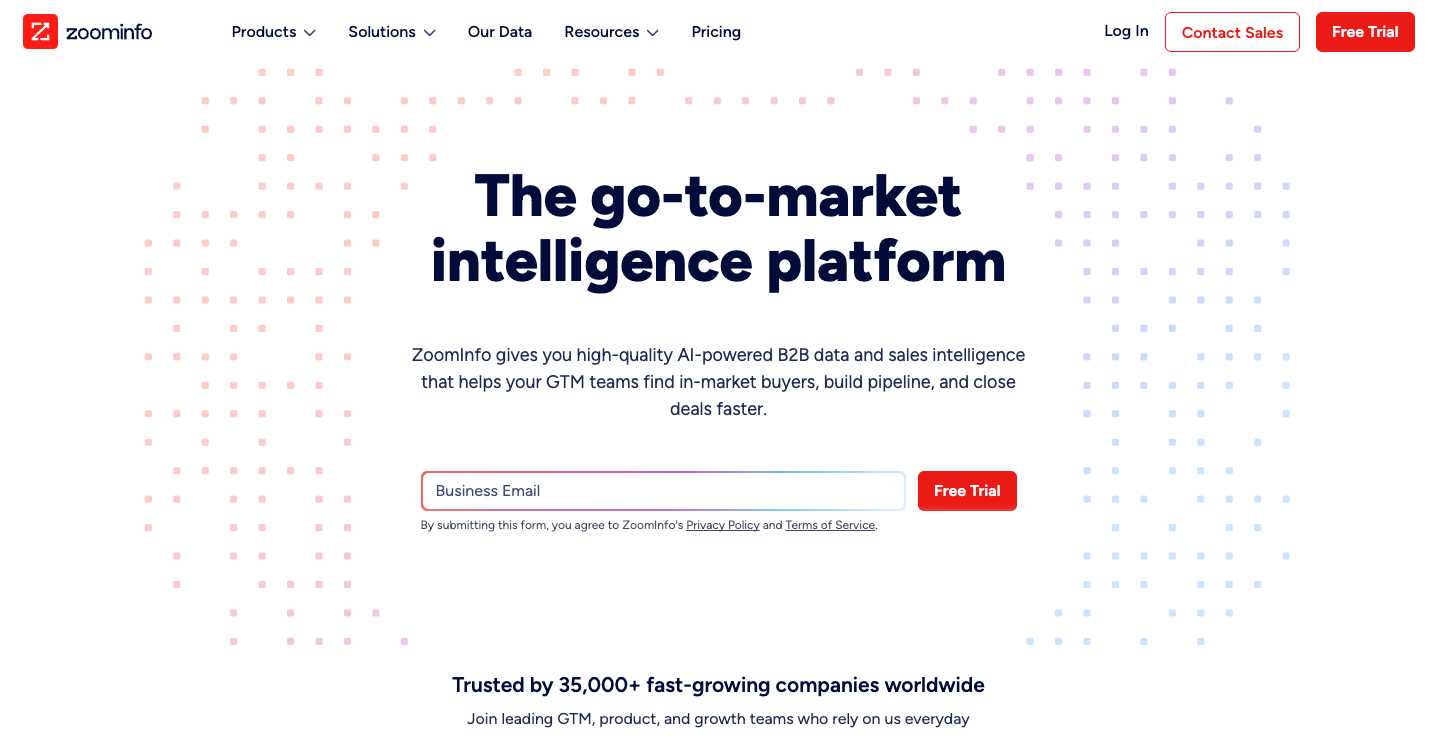
ZoomInfo is the enterprise incumbent in B2B sales intelligence, with the largest US-focused database at 260M+ professional profiles, 135M+ verified phone numbers, and deep firmographic, technographic, and intent data.
ZoomInfo goes well beyond contact lookup. Its intent data layer tracks buying signals across the web, so ABM teams can prioritize accounts actively researching relevant topics. An AI copilot assists with prospecting and list building. Org charts, technographics, and departmental breakdowns give enterprise reps account context that broader but shallower databases don't provide. Data refreshes run on monthly cycles, so it’s worth noting for teams that act on time-sensitive signals like job changes or funding events, where records can age before the next update.
ZoomInfo does not publish pricing on its website. All plans require a sales conversation, annual contracts are the standard structure, and add-ons for intent data, advanced automation, and international coverage increase the total.
Best fit: Large sales teams selling primarily into US markets that need firmographic depth, intent signals, and enterprise-grade account intelligence.
Not the right fit: Small teams, early-stage budgets, or pipelines that depend on accurate non-US contact data.
Cognism
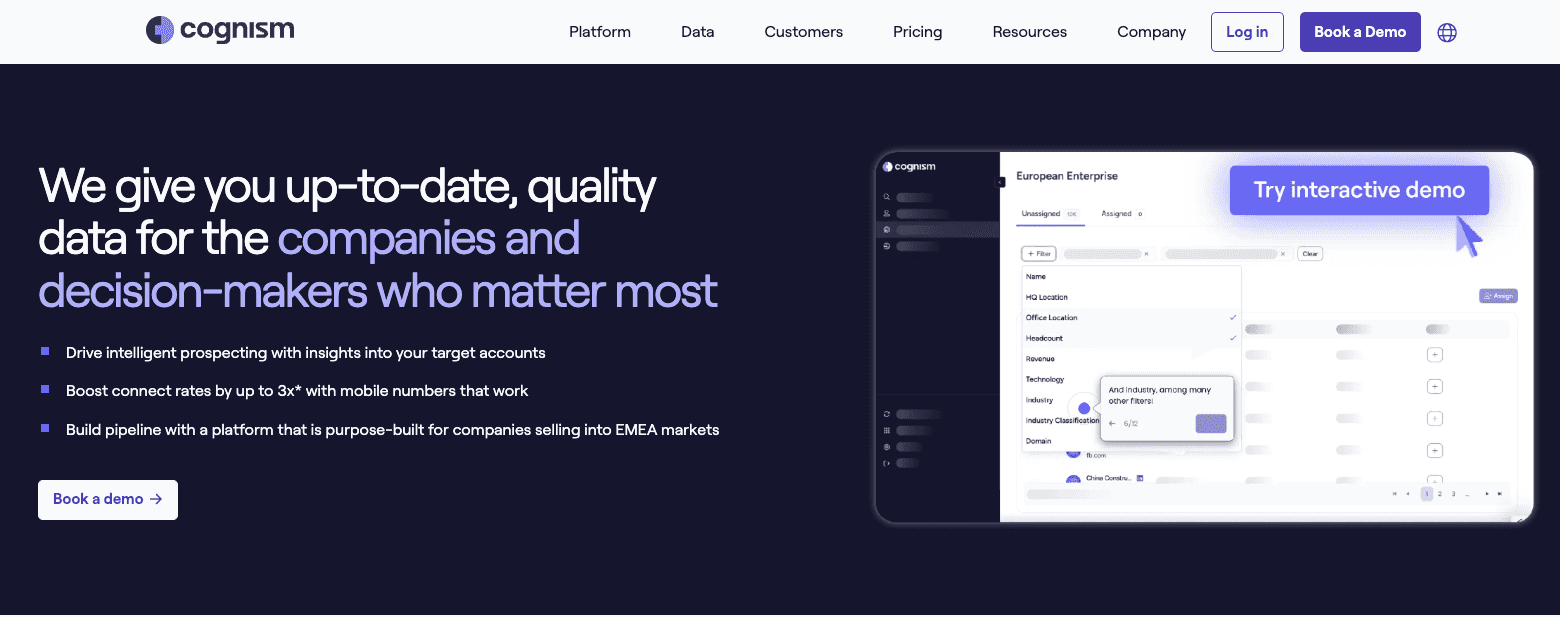
Cognism is a GDPR-compliant B2B data provider specializing in phone-verified mobile numbers and European contact coverage, with ISO 27701 certification and DNC screening across 11 countries.
Where Cognism separates itself is in the quality of phone numbers. Its Diamond Data program verifies mobile numbers through a 16-step process combining AI and manual human checks. Cognism claims a 3x increase in connection rate based on Diamond Data figures. For teams where cold calling is the primary channel, that accuracy gap impacts outcomes a lot.
Recruiting teams also get strong value here. Verified phone numbers and complete professional profiles make direct candidate outreach possible without bouncing between multiple tools to find a working number.
Compliance is the other major draw. Cognism screens against Do Not Call lists in the USA, Canada, Australia, Germany, France, Spain, Ireland, Belgium, Croatia, Portugal, and Sweden, whereas Apollo screens only in the UK and the US. The ISO27701 certification adds data privacy assurance that procurement and legal teams at larger organizations increasingly require.
Pricing follows a seat-based model with unrestricted exports and no credit caps on data pulled. However, Cognism does not publish exact pricing on its website.
Best fit: Call-heavy sales teams targeting European markets that need verified mobile numbers and multi-country DNC compliance. Also strong for recruiters who need reliable direct-dial numbers for candidate outreach.
Not the right fit: Email-only teams, US-only pipelines where ZoomInfo's depth may be more relevant, or technical teams that need API-first infrastructure rather than a GUI platform.
Lusha
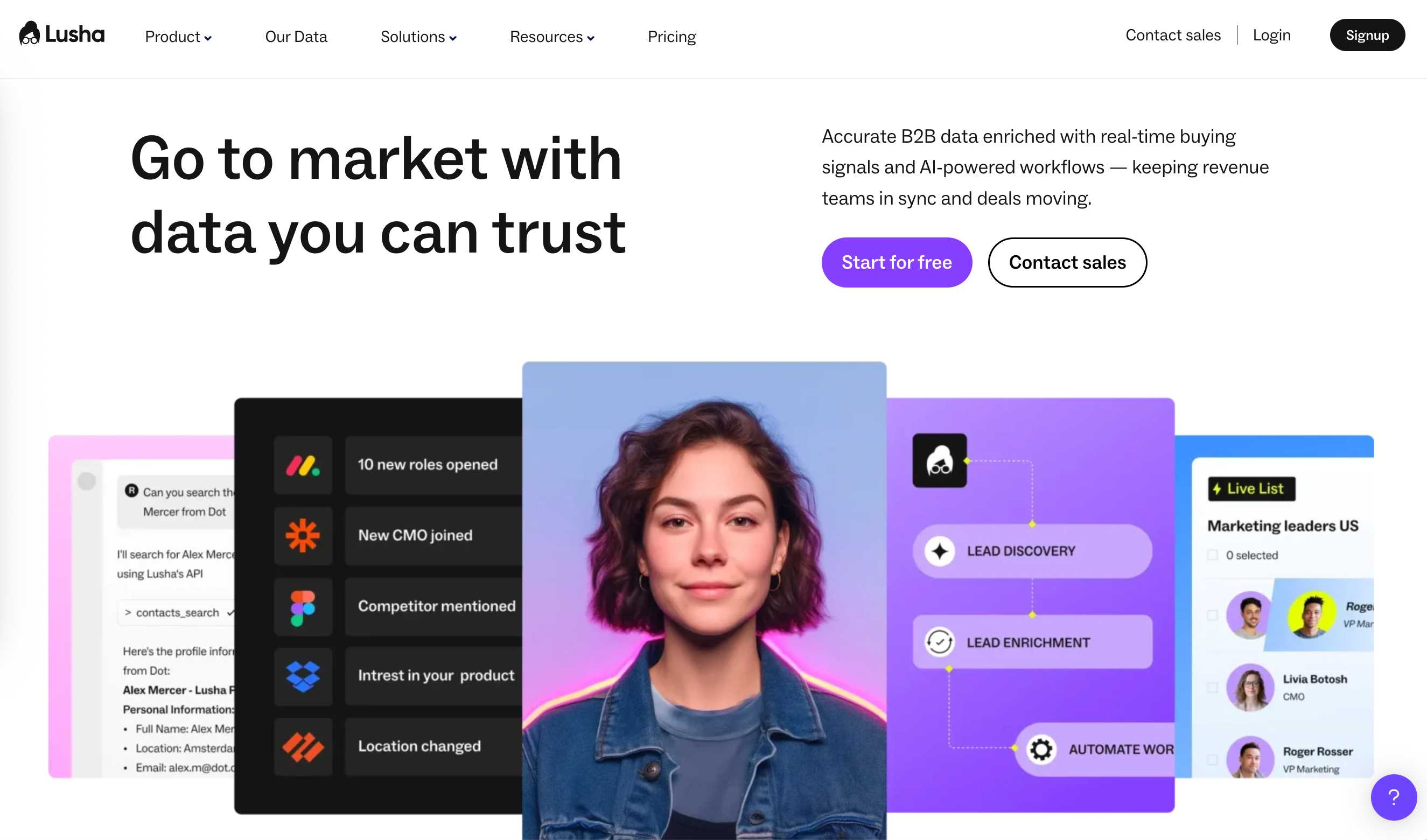
Lusha is a self-serve contact data platform built for speed and simplicity, with a free tier and transparent pricing that starts well below most competitors.
Lusha's biggest strength is speed to first prospect. Install the Chrome extension, visit a professional profile, and get contact details in a couple of clicks. No complex onboarding, no CRM configuration upfront, no demo required. For a solo SDR or small team that just needs working emails and direct dials, that simplicity is hard to beat.
The free plan includes 40 credits per month, the Starter plan runs $37.45 per user per month billed yearly, and phone numbers cost 5 credits each, so teams can model their monthly spend before committing.
The tradeoff is depth. Lusha's database is smaller than ZoomInfo's and Cognism's, and non-US data quality gets mixed reviews. If your needs grow past quick lookups into multi-step sequences, account-level intelligence, or EMEA compliance, you'll likely outgrow it, but for what it does, it does it with minimal friction.
Best fit: Individual contributors and small sales teams that need affordable, fast contact lookups without committing to an enterprise contract or lengthy onboarding.
Not the right fit: Larger teams needing deep firmographic data, verified European phone numbers, intent signals, or compliance infrastructure beyond basic US coverage.
Seamless.AI
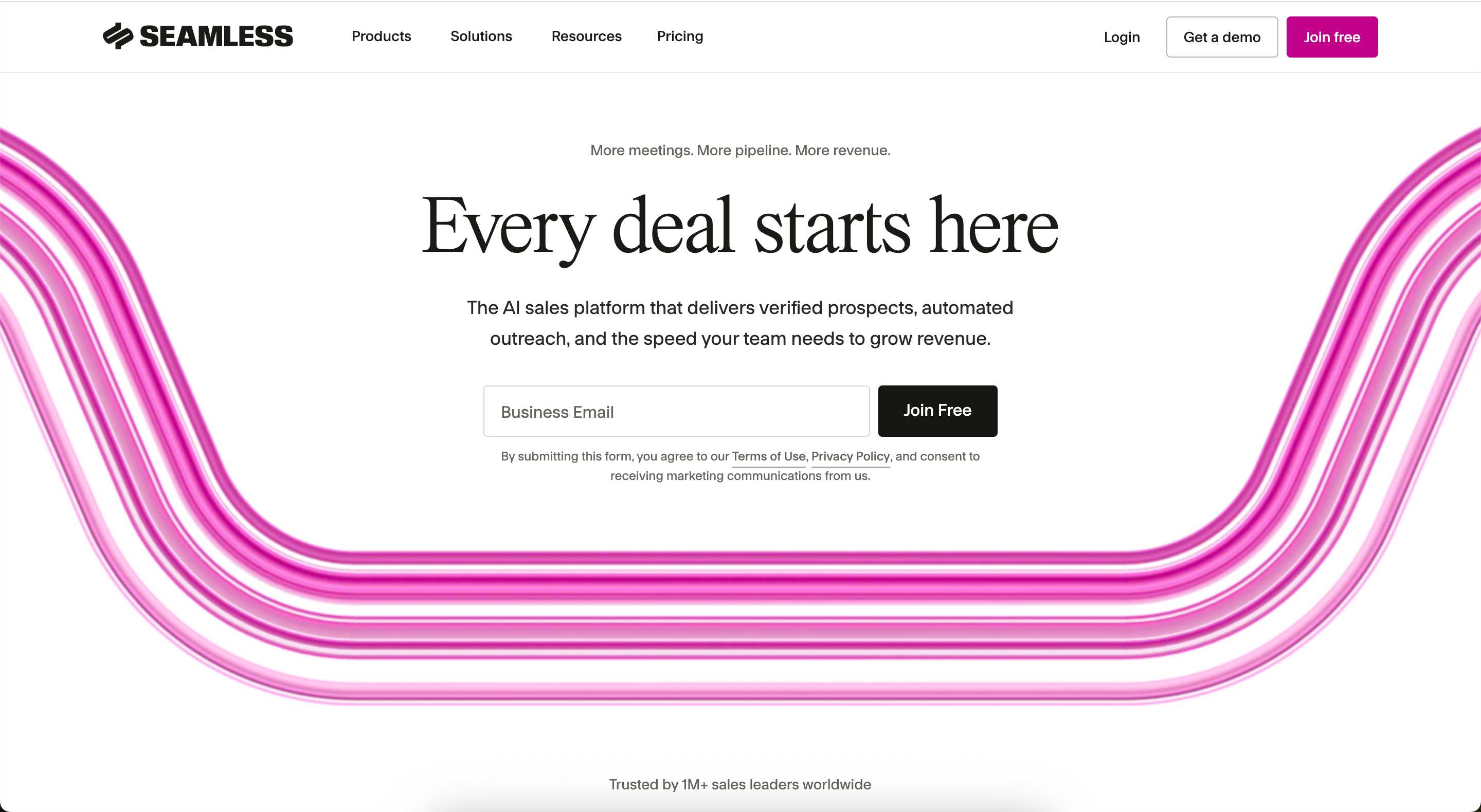
Seamless.AI is a real-time AI-powered contact search engine that finds email addresses and phone numbers on demand rather than serving them from a static database.
The main draw is list-building speed. Enter target criteria, and the AI searches for matching contacts in real time rather than pulling from a static database. For teams that need to build large prospect lists quickly, that velocity is a genuine advantage over platforms where you're browsing a fixed database and hoping records are current.
The catch is consistency. User reviews frequently note that results are inconsistent, and some contacts come back current, others outdated or incorrect. Teams that get the most from Seamless.AI tend to treat it as a discovery layer and run results through a secondary verification tool before loading contacts into a sequence.
Pricing is not published on the website. It's worth confirming current plan details and credit structures during evaluation.
Best fit: Speed-focused prospecting teams that prioritize list-building velocity and already have a verification step in their workflow.
Not the right fit: Teams that need high-accuracy data out of the box without a secondary verification layer, or organizations prospecting heavily outside the US.
UpLead
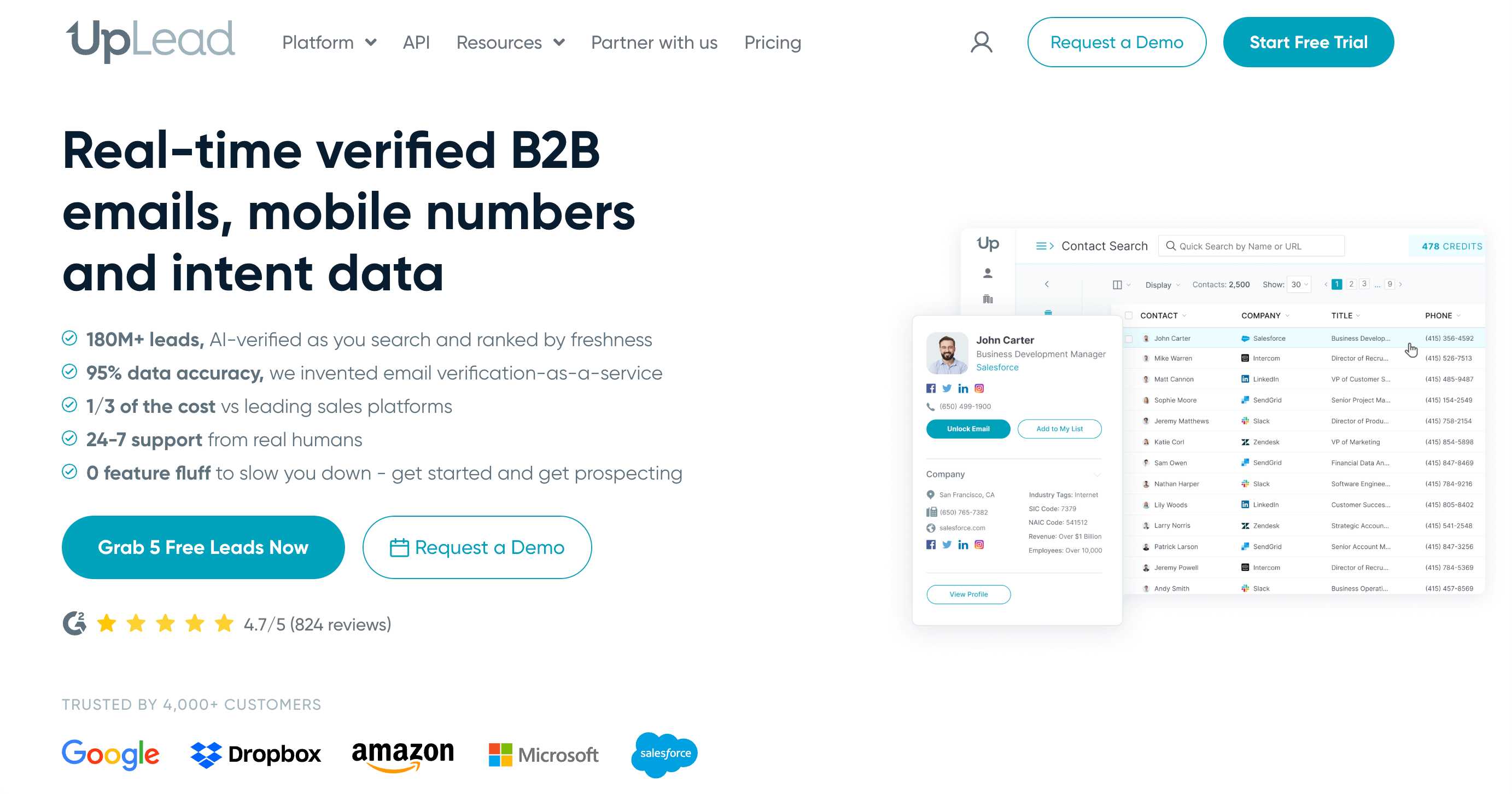
UpLead is a B2B contact database with built-in real-time email verification that guarantees 95% accuracy on every search result.
UpLead's defining feature is its 95% accuracy guarantee. Every email is verified at the moment you search, and contacts that fail verification never make it into your exported list. For teams where bounced emails are tanking sender reputation, that measurable accuracy floor matters more than database size.
The database is smaller than ZoomInfo's or Apollo's, and filtering is functional but not as deep as enterprise platforms. UpLead is built to do one thing with high confidence: give you email addresses that actually work.
Best fit: Teams where email bounce rate is the primary problem and a guaranteed accuracy floor matters more than total database size or feature depth.
Not the right fit: Organizations that need phone-verified mobiles, deep firmographic intelligence, or a database large enough to cover niche industries at volume.
Kaspr
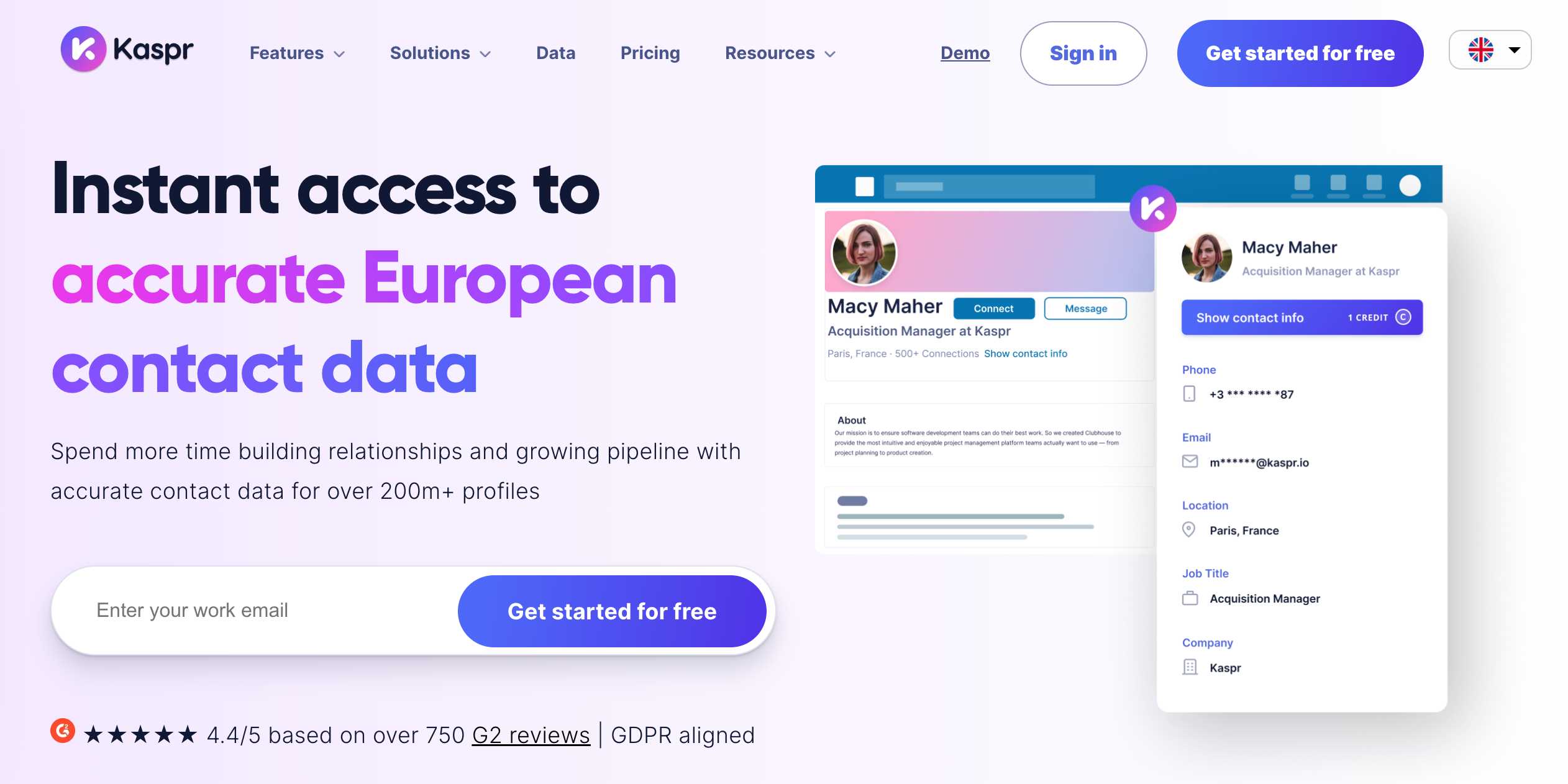
Kaspr is a browser-based contact lookup tool owned by the Cognism group, built for individual prospectors who need quick access to European B2B contact data.
The value proposition is simple: install the Chrome extension, visit a professional profile, and pull email addresses and phone numbers directly from the browser. Kaspr draws on Cognism's European data infrastructure, so EU contact quality, particularly phone numbers, runs stronger than US-centric alternatives.
The free tier includes 15 B2B email credits and 5 phone and direct email credits per month. The Starter plan at €45 per month unlocks unlimited B2B emails. However, there's no built-in sequencer, no intent data, and no advanced filtering. It's a focused lookup tool, and is priced like one.
Best fit: Individual prospectors and small teams focused on European markets who need a free or low-cost starting point for browser-based contact lookups.
Not the right fit: Teams needing a full-platform replacement for Apollo, US-heavy pipelines, or organizations that require CRM integrations, sequencing, or account-level intelligence.
Cold email and deliverability-focused alternatives
Cold email specialists are engagement tools built for deliverability and inbox warm-up, not contact databases. This distinction changes what you're actually buying.
Teams leaving Apollo tend to fall into two camps.
Some have a data problem, such as wrong contacts, stale emails, and high bounce rates.
Others have a delivery problem, meaning the contacts are fine, but emails land in spam because the sending infrastructure isn't built for volume.
These are two different issues that need two different fixes, and conflating them leads to buying the wrong thing.
Sending infrastructure, like inbox warm-up, IP rotation, email account management, and reply tracking, has nothing to do with where you source your contacts. If your open rates cratered but your bounce rates are fine, the problem probably isn't your data provider. It's your sending setup.
TL;DR: How the cold email alternatives compare
Data accuracy | Geographic coverage | Pricing | Ease of adoption | |
Instantly.ai | Not applicable. No built-in database. Accuracy depends on your upstream data source. | Not applicable. No contact data provided. | Growth $37.60/month, Hypergrowth $77.60/month, Light Speed $286.30/month. Unlimited email accounts on all plans. | Fast. Connect accounts, import a list, start sending. Warm-up begins automatically. |
Saleshandy | 800M+ contacts in Lead Finder. Reasonable for email-first outreach, though dedicated data providers offer deeper verification. | Broad international database. Wide but not as deeply verified as region-specific tools for European phone numbers. | Lead Finder from $24/month. Cold Emailing from $25/month. Scale with whitelabel at $139/month. All billed annually. | Straightforward interface. Agency teams onboard quickly with built-in multi-client management. |
Hunter.io | Bulk email verification included. Solid accuracy for email addresses. No phone data. | Primarily email-focused. Coverage follows domain availability, not regional databases. | Free tier at 50 credits/month. Starter $34/month billed yearly with 2,000 credits/month. | Simple. Search by domain, verify in bulk, send basic sequences from one interface. |
Snov.io | Email finder with built-in verification. Accuracy is reasonable for email-first workflows. | Broad but shallow. Better for email than phone or firmographic data. | Starts at $39/month. Free trial available. | Single dashboard for finding and sending. Low learning curve. |
Findymail | Waterfall approach queries multiple sources in sequence, maximizing match rates on hard-to-find contacts. | Coverage inherits from whichever sources are queried in the waterfall sequence. | Usage-based. Positioned as a supplementary layer, not a primary platform. | Requires integration into an existing workflow. Not a standalone prospecting tool. |
Instantly.ai
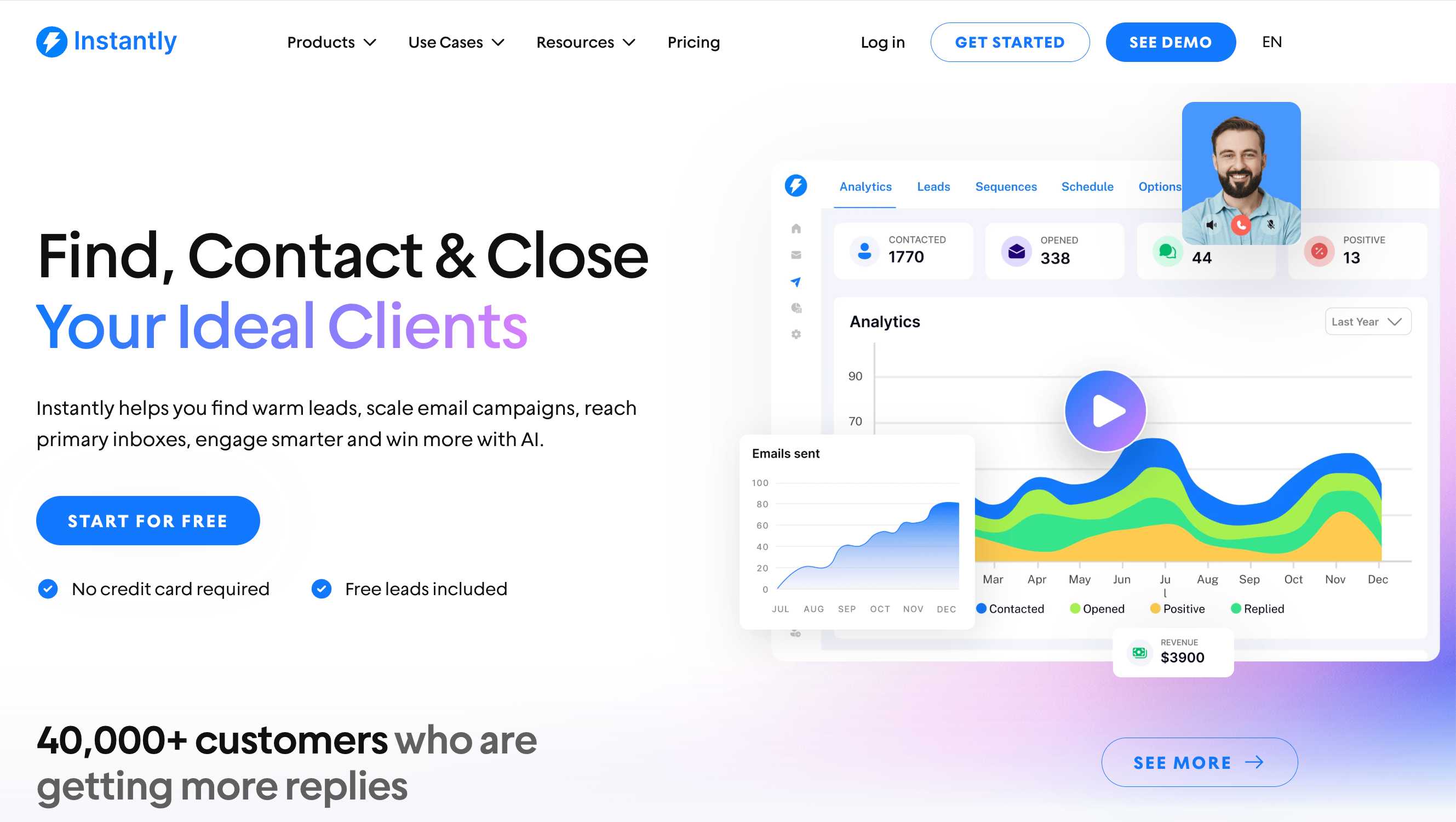
Instantly.ai is a cold email sending platform built for high-volume outreach, with unlimited email accounts, built-in inbox warm-up, and automatic account rotation.
Instantly is not a contact database. You bring your own prospect list, and Instantly handles everything after that: warming up inboxes, rotating sends across accounts so no single domain gets flagged, and tracking replies in a unified view. That narrow focus is the point, as teams sending 500+ cold emails per day need purpose-built sending infrastructure, not a platform where email is one feature among twenty.
The Growth pricing plan starts at $37.60 per month, Hypergrowth at $77.60 per month, and Light Speed at $286.30 per month. All plans include unlimited email accounts and warm-up.
Best fit: High-volume cold email operators who already have a reliable data source and need dedicated sending infrastructure with inbox warm-up and rotation.
Not the right fit: Teams that need contact data, company intelligence, or a full prospecting workflow. Instantly requires a separate data provider to function.
Saleshandy
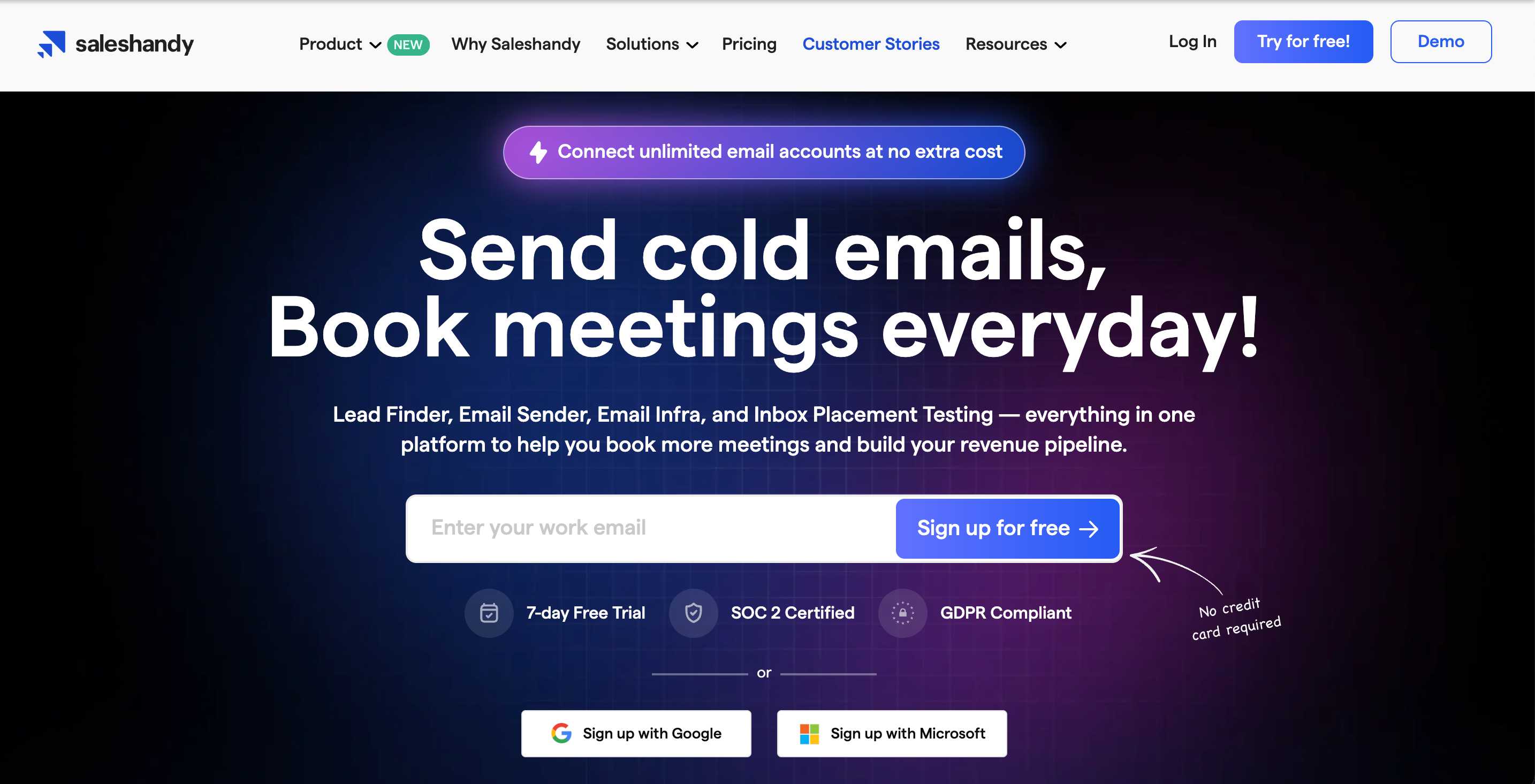
Saleshandy is a cold email and lead generation platform that separates data sourcing and outreach into independently priced products, with an 800M+ contact database and complete email account support.
Where Instantly.ai requires you to bring your own leads, Saleshandy lets you source them in-house. The Lead Finder product starts at $49 per month on the annual Lead Starter plan. Cold emailing starts at $25 per month on the Outreach Starter plan. You can buy either independently or combine them.
That modular pricing makes Saleshandy attractive for agencies. The Outreach Scale tier at $139 per month billed annually includes whitelabel capabilities, and Pro plans and above support unlimited email accounts and team members.
Best fit: Teams and agencies that want data sourcing and cold email outreach in one platform at a lower combined price than Apollo, with the flexibility to buy each piece separately.
Not the right fit: Organizations needing deep firmographic intelligence, phone-verified contacts for calling, or API-first infrastructure for custom workflows.
Email-only tools
Email-only tools are single-purpose platforms built for finding and verifying email addresses, not managing full sales workflows.
Hunter.io offers domain search and bulk email verification with a free tier at 50 credits per month. The Starter plan runs $34 per month, billed yearly with 2,000 credits per month. Also includes lightweight cold email sequences.
Snov.io combines an email finder with a built-in campaign tool. Plans start at $39 per month with unlimited team seats. Sits between a pure finder and a full sending platform.
Findymail uses waterfall email finding, i.e., querying multiple data sources in sequence until it finds a verified match. Most useful as a supplementary verification layer alongside your primary data provider rather than a standalone platform.
Best fit: Teams that only need email discovery and verification without subscribing to a full sales intelligence suite. All three tools work well as lightweight additions to an existing stack.
Not the right fit: Organizations that need phone numbers, company-level intelligence, intent signals, or high-volume sending infrastructure. These tools solve one piece of the puzzle, namely email accuracy, and leave the rest to other products in your stack.
All three of these tools perform better when they're fed accurate, fresh data upstream. Which brings us to the layer underneath: data infrastructure built for teams that want to control where their company and contact data comes from in the first place.
API and data infrastructure alternatives for technical teams
API-first data providers are infrastructure tools that deliver structured company and contact data via programmatic endpoints, not graphical dashboards. They are built for systems, not for sales reps clicking through a UI.
Every tool covered so far assumes a human user logging in, running a search, and launching a sequence. But a growing number of teams don't work that way. They're building AI SDRs that prospect autonomously, have specific data enrichment needs, or are developing internal tools where the "user" is code making API calls thousands of times per hour.
For these teams, the right Apollo alternative isn't a platform with a different logo on the login screen. It's their data infrastructure that they own and control via API. You'll need engineering resources to implement, as there's no Chrome extension or drag-and-drop builder. However, the advantage is full flexibility: you choose what data to pull, how to process it, when to act on it, and what sits on top of it.
TL;DR: How the API and data infrastructure alternatives compare
Data accuracy | Geographic coverage | Pricing | Ease of adoption | |
Crustdata | Real-time web indexing at the moment of request. Multi-source aggregation from 10+ platforms with entity resolution across name variations. Data is live, not monthly snapshots. | Global. 60M+ companies indexed. Coverage is signal-rich (headcount trends, funding, job listings) rather than optimized for contact volume alone. | Credit-based, usage-driven. Tied to API calls, not seats. | Requires engineering resources. No GUI. API documentation is the primary interface. Dedicated engineering support available. |
Clay | Aggregates 100+ providers via waterfall enrichment. Accuracy depends on whichever providers are queried, not Clay's own dataset. | Inherits coverage from configured providers. Can be strong if the right sources are selected in the waterfall. | Free tier available. Paid plans up to $800/month (Pro). Credits vary by provider queried and enrichment steps per record. | Spreadsheet interface accessible to non-engineers, but an effective waterfall configuration requires significant RevOps expertise. |
Crustdata
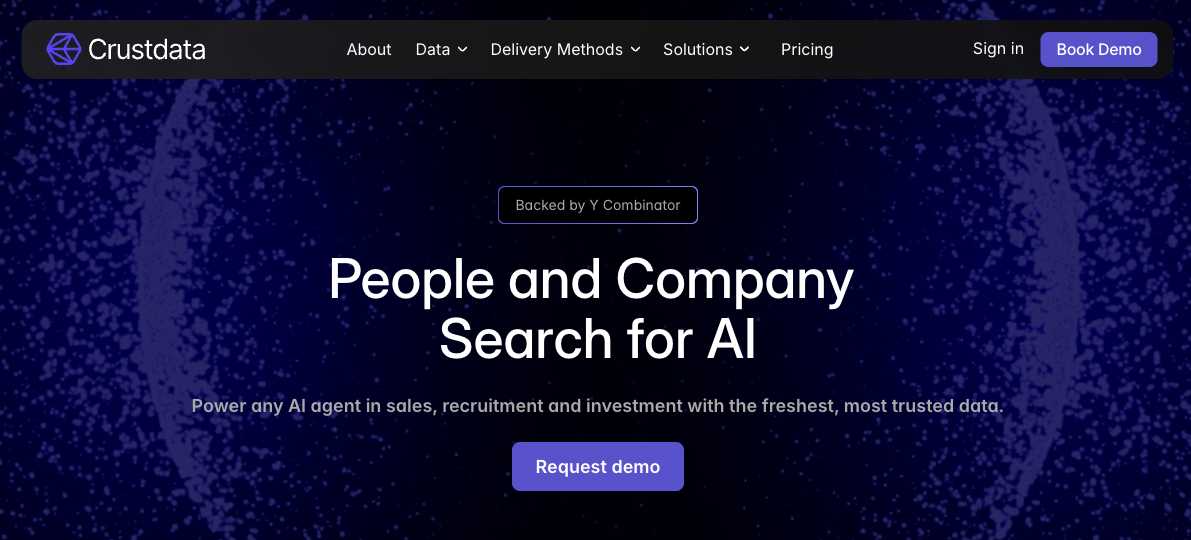
Crustdata is a real-time B2B data infrastructure platform that provides company and person data through API endpoints, with data fetched at the moment of request rather than served from a pre-built cache.
Most B2B data providers, Apollo included, maintain a static database refreshed on monthly or quarterly cycles. Crustdata indexes the web at request time, so results reflect what's true now, not at the last refresh. This directly addresses the data decay problem from the opening section, as the architecture eliminates staleness rather than working around it.
Crustdata's APIs are split into two modes: search/discovery (find entities matching your criteria) and enrichment (get detailed data on entities you already know).
Search/Discovery is for when you know the profile but not the specific targets. You describe what you're looking for using filters, and the API returns all matching results.
Company Discovery API: 95+ filters including industry, headcount range, departmental growth rates, employee skills distribution, funding recency, job listing velocity, web traffic trends, and geographic presence. Returns matching companies with top-level datapoints.
People Discovery API: 60+ filters, including current title, past companies, location, skills, education, and years of experience. Returns matching profiles with basic information. Real-time web search can discover people beyond the pre-indexed database.
Enrichment is for when you already have a specific target and need full context. You submit an identifier and receive a detailed profile.
Company Enrichment API: Input a domain, company name, or company URL. Returns 250+ datapoints, including headcount broken down by department and geography, employer reviews, product reviews, funding history, tech stack, web traffic analytics, job listings, news mentions, and decision-maker profiles.
People Enrichment API: Input a professional profile URL or business email. Returns 90+ datapoints, including complete work history with start and end dates at each role, education, skills, languages, social profiles, and contact information.
Best fit: Technical teams building AI SDRs, custom prospecting workflows, internal sales tools, or investment platforms that need real-time company signals and programmatic access to 95+ discovery filters via API.
Not the right fit: Non-technical sales teams that need a self-serve prospecting UI, teams without developer resources, or organizations looking for a drop-in Apollo replacement with built-in email sequencing and a dialer.
Clay
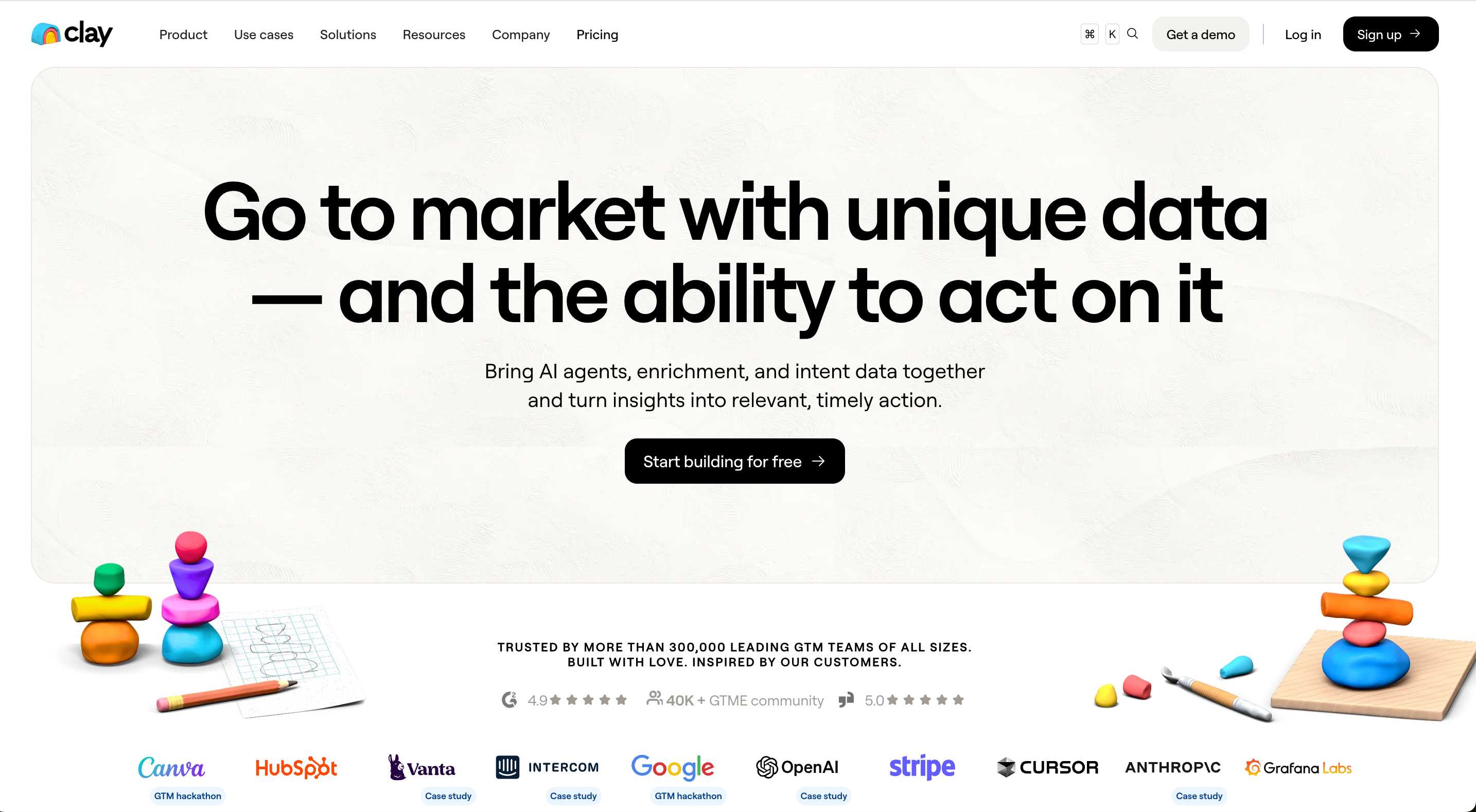
Clay is a data orchestration platform that connects 150+ data providers into a spreadsheet-like interface, using waterfall enrichment to query multiple sources in sequence.
Rather than maintaining its own dataset, Clay acts as an aggregation layer, querying providers in a configured sequence until it finds a match. AI research agents (Claygent) can look up custom datapoints not available in standard databases. For RevOps teams that want to experiment with different data sources and build enrichment workflows visually, Clay offers flexibility that single-provider platforms don't.
The drawback is that Clay works well only when it's your central workspace, building lists, enriching records, and pushing results to a CRM. But it doesn't function as an external API. If your team needs workflows that connect multiple external tools programmatically, like a sales rep clicking "refresh data" in HubSpot and getting updated records back automatically, that's difficult to build with Clay at scale. Credit costs can also escalate with multi-source waterfalls and AI research across large lists.
Best fit: Technically proficient RevOps teams who want to configure their own multi-source enrichment sequences, experiment with different data providers, and centralize their enrichment work inside a single workspace.
Not the right fit: Teams that need a programmatic API for external integrations, organizations building AI agents or automated pipelines that require structured JSON endpoints, or teams that want to trigger enrichment from inside their CRM without manual intervention in Clay's UI.
For teams that want to experiment with different data sources and build enrichment playbooks inside a visual workspace, Clay is a capable tool. But for production systems with AI agents that need sub-hour data or CRM integrations that update on demand, Crustdata's API-first architecture and proprietary real-time data provide a foundation that an aggregation layer can't replicate.
That said, some teams use both: Clay for exploratory enrichment and early-stage research, and Crustdata's APIs are the production data layer, once workflows are validated and need to run reliably at scale.
Finding the right data layer for your sales stack
The right Apollo alternative depends on which problem you're solving. All-in-one platforms reduce vendor management but lock you into one provider's data and refresh cycle. Best-of-breed stacks add integration work but let you optimize each layer independently. API-first infrastructure requires engineering but enables custom systems that no off-the-shelf platform can replicate.
If your problem is a turnkey platform or deliverability, the profiles above give you a shortlist. Trial two to three tools with your own prospect list before committing to annual contracts, as real-world accuracy against your ICP matters more than any vendor's claimed database size.
If the data decay problem from the opening section resonated and the API-first category felt like your use case, Crustdata's architecture is built to fix that specific issue. Real-time indexing means data is fetched when you request it, not served from a cache that's weeks old.
Book a demo to walk through your specific workflows with the team!


Products
Popular Use Cases
Competitor Comparisons
95 Third Street, 2nd Floor, San Francisco,
California 94103, United States of America
© 2026 Crustdata Inc.
Products
Popular Use Cases
Competitor Comparisons
95 Third Street, 2nd Floor, San Francisco,
California 94103, United States of America
© 2025 CrustData Inc.
Products
Popular Use Cases
95 Third Street, 2nd Floor, San Francisco,
California 94103, United States of America
© 2025 CrustData Inc.